


Continually improve your business with quality requierements for fusion welding of metallic materials
Quality requirements for fusion welding of metallic materials
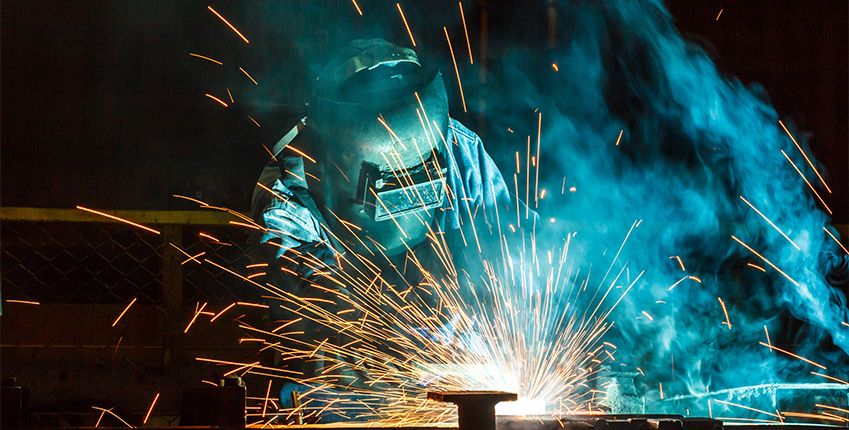
Welding is one of the most critical processes in modern industry – from the construction of bridges and ships, through oil platforms and pressure vessels, to railway wagons and steel structures. The quality of welded joints directly affects the safety, reliability, and longevity of final products. A welding error can have catastrophic consequences – from structural collapse to explosions and loss of human life.
In this context, the ISO 3834 standard emerges as an internationally recognized framework that defines the requirements for a quality management system in welding. For companies in the European Union (EU) engaged in metal processing, production of steel structures, shipbuilding, or any industry where welding is a critical process, this standard represents the key to accessing demanding projects, a proof of competence, and a guarantee of quality.
ISO 3834 certification is not just a technical requirement – it is a strategic investment that opens doors to international markets, builds client trust, and ensures that every welded joint meets the highest standards of quality and safety.
What is the ISO 3834 standard?
The ISO 3834 standard, with the full name “ISO 3834 – Quality requirements for fusion welding of metallic materials”, represents an internationally recognized quality system specifically designed for welding operations.
The standard was developed by the International Organization for Standardization (ISO) through the technical committee ISO/TC 44 for welding and allied processes. The current version dates from 2005 with revisions from 2021, reflecting the latest technologies and best practices in the industry.
The main purpose of ISO 3834 is to:
- Ensure consistent quality of welded joints
- Define requirements for personnel, equipment, procedures, and process
- Enable the demonstration of the organization’s technical capability
- Prevent errors through a systematic approach to quality
- Provide traceability from material to the final product
The scope of application covers all aspects of welding operations:
- Technical review and planning
- Welding Procedure Specifications (WPS)
- Qualification of welders and operators
- Inspection and testing
- Welding equipment
- Consumables
- Storage and handling
- Non-destructive testing (NDT)
- Equipment calibration
Difference from ISO 9001 – while ISO 9001 covers the general quality management system, ISO 3834 is a specialized standard that goes deep into the technical requirements specific to welding. An organization can have ISO 9001, but without ISO 3834 it cannot demonstrate competence in welding.
Connection with other standards – ISO 3834 is harmonized with a series of technical standards for welding (ISO 9606 for welder qualification, ISO 15614 for procedure qualification, EN 1090 for steel structures) which facilitates integration.
Key benefits of the ISO 3834 standard
The implementation of the ISO 3834 standard brings organizations numerous concrete benefits:
- Access to demanding projects is the most direct commercial benefit. Large projects in shipbuilding, the oil and gas industry, energy, bridge construction, and railway infrastructure require ISO 3834 as a prerequisite for participating in a tender. Without a certificate, these doors remain closed.
- Demonstration of technical capability – the certificate is an independent, third-party confirmation that the organization has the necessary resources, knowledge, and systems to produce high-quality welded structures. This is much more powerful than one’s own claims.
- Reduction of defects and reworks is a direct financial benefit. The systematic approach to quality required by ISO 3834 leads to a dramatic reduction in errors, which means fewer reworks, less material waste, and less lost time.
- Increased productivity comes from clear procedures, well-trained personnel, and a preventive approach that prevents problems instead of solving them after they happen.
- Greater safety of final products – high-quality welding means reliable structures that will not fail in exploitation, which protects end users and the manufacturer’s reputation.
- Lower costs per project – although implementation requires an investment, in the long run, it leads to lower costs through error reduction, more efficient production, and fewer complaints.
- Negotiating power – companies with ISO 3834 can negotiate better terms because they demonstrate lower risk and higher reliability.
- International portability – the certificate is recognized worldwide, enabling exports and work on international projects.
Why is the ISO 3834 standard important?
The ISO 3834 standard has a multidimensional importance that goes beyond purely business aspects:
- The safety of human lives comes first. Welded structures such as bridges, ships, pressure vessels, oil platforms, and railway wagons – all of this must be absolutely reliable. A welding error can lead to catastrophic consequences. ISO 3834 systematically minimizes these risks.
- Economic impact – poor welding quality costs the industry billions annually through reworks, delayed projects, warranty costs, and product recalls. ISO 3834 protects against these costs.
- Regulatory compliance – many industries have strict regulatory requirements for welding (pressure vessels must meet the PED directive, steel structures EN 1090, ships classification societies). ISO 3834 provides the basis for meeting these requirements.
- Investment protection – large infrastructure projects are worth millions or billions. Investors, insurers, and regulators demand quality guarantees. ISO 3834 provides that guarantee.
- Industrial competitiveness – countries and regions with high welding standards attract more investments and projects. ISO 3834 raises the overall level of the industry.
- Professionalization of the craft – the standard encourages continuous training, monitoring of new technologies, and skills development, elevating the entire welding craft.
- Preservation of know-how – documenting procedures, specifications, and experiences preserves organizational knowledge that would otherwise leave with people who leave the company.
- Responsibility to the community – high-quality structures serve for decades. ISO 3834 is a way for the industry to demonstrate responsibility towards future generations who will use today’s structures.
Key principles of the ISO 3834 standard
The ISO 3834 standard rests on fundamental principles that guide all aspects of welding operations:
- Principle 1: Technical review and planning – every welding task must be carefully planned before work begins. This includes understanding the requirements, identifying critical characteristics, and planning how they will be achieved.
- Principle 2: Specified and qualified procedures – nothing is welded “by eye”. Every process must have a written welding procedure specification (WPS) that is qualified through testing (WPQR) according to relevant standards.
- Principle 3: Qualified personnel – only welders, operators, and inspectors with valid qualifications are allowed to perform their jobs. Qualifications must be up-to-date and appropriate for the types of welding they perform.
- Principle 4: Approved materials – base materials and consumables (electrodes, wires, fluxes) must have appropriate certificates and be properly stored.
- Principle 5: Qualified equipment – welding equipment must be fit for purpose, properly maintained, and calibrated.
- Principle 6: In-process control – quality is built during the process, not inspected afterward. Continuous checks during welding prevent errors.
- Principle 7: Traceability – it must be possible to trace every welded joint back to the procedures, materials, welders, and conditions under which it was executed.
- Principle 8: Non-destructive testing (NDT) – where required, welded joints are examined using methods that do not damage the product (radiography, ultrasound, penetrant, magnetic particles).
- Principle 9: Management of nonconformities – defects are not hidden but documented, analyzed, and resolved in a systematic manner.
- Principle 10: Continuous improvement – the system is constantly evaluated and improved based on experience, new technologies, and best practices.
Structure of the ISO 3834 standard
The ISO 3834 standard is organized into several parts that cover different levels of requirements:
- ISO 3834-1: Criteria for the selection of the appropriate level of quality requirements. This part helps organizations determine which level of certification they need depending on the criticality of their products.
- ISO 3834-2: Comprehensive quality requirements. The strictest level with the most detailed requirements. It applies to:
- Critical structures where failure would have catastrophic consequences
- Pressure vessels and equipment
- Ships and offshore structures
- Bridges and large steel structures
- Nuclear installations
- Railway equipment
- ISO 3834-3: Standard quality requirements. A medium level applicable to:
- General industrial structures
- Non-critical pressure vessels
- Building structures
- General purpose machinery and equipment
- ISO 3834-4: Elementary quality requirements. The lowest level with minimal requirements for:
- Simple structures without special requirements
- Products where failure would not have serious consequences
- ISO 3834-5: Documents with which it is necessary to conform to claim conformity. Defines which documents the organization must have to demonstrate compliance.
- ISO 3834-6: Guidelines on implementing ISO 3834. Provides practical advice for implementing the requirements from parts 2, 3, and 4.
Key areas covered in all levels:
- Technical review
- Understanding customer requirements
- Assessment of technical feasibility
- Identification of necessary resources
- Personnel
- Welding coordinators
- Welders and operators
- NDT personnel
- Inspectors
- Equipment
- Welding power sources
- Auxiliary equipment
- Measuring devices
- NDT equipment
- Welding
- WPS/WPQR documentation
- Joint preparation
- Welding
- Post-weld treatment
- Consumables
- Procurement and verification
- Storage and handling
- Identification
- Inspection and testing
- Visual inspection
- NDT
- Destructive testing (where required)
Key concepts of the ISO 3834 standard
Understanding the key concepts is essential for successful implementation:
- Welding Procedure Specification (WPS) is a written document that describes in detail how a specific welded joint should be executed. It includes:
- Base material (type, thickness)
- Consumable material (type, dimension)
- Welding process (MIG, TIG, MMA, etc.)
- Welding position
- Current, voltage, speed
- Preheating and interpass temperature
- Post-weld heat treatment (PWHT)
- Welding Procedure Qualification Record (WPQR) is a document that proves that a specific WPS produces a high-quality welded joint. It is obtained through testing according to relevant standards (ISO 15614).
- Welding Coordination Personnel (WCP) is the staff responsible for coordinating welding activities. There are three levels according to ISO 14731:
- Comprehensive level – Welding Engineer
- Specific level – Welding Technologist
- Basic level – Welding Specialist The level of WCP required depends on the level of ISO 3834 certification (Level 2 requires Comprehensive level).
- Welder Qualification according to ISO 9606 proves that the welder has the skills necessary to perform specific types of welded joints with high quality. The qualification covers:
- Welding process
- Material
- Thickness
- Position
- Joint type
- Non-destructive testing (NDT) includes various methods:
- VT (Visual Testing) – visual inspection
- PT (Penetrant Testing) – penetrant test
- MT (Magnetic Testing) – magnetic particles
- RT (Radiographic Testing) – radiography
- UT (Ultrasonic Testing) – ultrasound
- Traceability makes it possible to identify for each welded joint:
- Who welded it (welder’s number)
- Which procedure was used (WPS number)
- Which materials were used (batch of base and consumable material)
- When it was executed
- Results of inspections and tests
- Preheat and Interpass Temperature – many materials require preheating before welding and maintaining a certain temperature between passes to prevent cracks and achieve a high-quality joint.
- Post-Weld Heat Treatment (PWHT) is a thermal treatment after welding that reduces residual stresses and improves mechanical properties.
- Manufacturing Test Plate – a test plate that is welded at the beginning of production or periodically to verify that the process is functioning correctly.
Areas of application of the ISO 3834 standard
The ISO 3834 standard is applied in a wide range of industries where welding is a critical process:
- Shipbuilding – ships are complex welded structures where quality is critical for safety and longevity. ISO 3834 is mandatory for shipyards that want classification of their ships.
- The oil and gas industry includes:
- Pipeline construction
- Offshore platforms
- Refinery installations
- Reservoirs and tanks
- Pressure vessels
- Energy sector:
- Power plants (conventional, nuclear)
- Boilers and heating plants
- Wind generators
- Solar structures
- Gas turbines
- Bridge construction and infrastructure:
- Steel and hybrid bridges
- Industrial halls and stadiums
- Cranes and heavy machinery
- Antenna towers
- Railway industry:
- Passenger and freight wagons
- Locomotives
- Trams
- Railway infrastructure
- Mechanical engineering:
- Heavy equipment
- Mining machinery
- Agricultural machinery
- Construction machinery
- Automotive industry:
- Truck and bus chassis
- Heavy vehicle components
- Manufacturers of trailers and semi-trailers
- Construction:
- Steel building structures according to EN 1090
- Facade structures
- Industrial platforms
- Production of pressure vessels:
- Boilers
- Pressure tanks
- Process equipment
- Heat exchangers
- Aerospace industry:
- Aircraft parts
- Helicopter structures
- Engine components
Benefits of implementing the ISO 3834 standard
The concrete, measurable benefits of implementing ISO 3834 are numerous:
- Direct access to tenders – many projects in shipbuilding, infrastructure, and energy explicitly require ISO 3834. Without the certificate, you cannot even participate.
- Reduction of defects – companies report a reduction of defects by 50-70% after implementation thanks to a systematic approach, clear procedures, and better training.
- Reduction of rework costs – fewer defects = less rework. This directly affects profitability because rework costs much more than “right first time” production.
- Faster production – clear procedures, well-trained staff, and a preventive approach allow a smoother workflow without downtime due to problems.
- Better material utilization – less waste through defect reduction and optimized procedures means direct savings on materials.
- Higher product prices – quality is paid for. Products from ISO 3834 certified factories often command premium prices because customers recognize the value.
- Easier access to financing – banks and investors view companies with certified systems more positively because it reduces risk.
- Attracting top talent – qualified welders and engineers want to work for companies with high standards and development opportunities.
- Reduction of insurance premiums – insurers offer better terms for certified companies due to lower risk.
- Liability protection – in case of problems, having a certified system shows that you were responsible and took reasonable precautions.
- Recognition of quality by customers – reduced or eliminated incoming inspection by customers who trust your system.
- Long-term business relationships – buyers build long-term partnerships with reliable suppliers who demonstrably deliver quality.
The process of implementing the ISO 3834 standard
Implementing ISO 3834 requires a systematic and well-planned approach:
- Phase 1: Decision and planning (Month 1)
- Formal commitment of top management
- Decision on the level of certification (ISO 3834-2, 3 or 4)
- Appointment of the project team
- Allocation of resources
- Creation of a project plan with deadlines
- Phase 2: Initial assessment (GAP analysis) (Months 1-2)
- Detailed analysis of the current state vs ISO 3834 requirements
- Verification of qualifications of existing personnel (WCP, welders, NDT)
- Review of existing WPS/WPQR documents
- Evaluation of equipment
- Assessment of documentation
- Identification of gaps
- Assessment of necessary investments
- Phase 3: Ensuring qualified personnel (Months 2-4)
- Welding Coordination Personnel: Training and qualification of WCP at the required level (often requires attending courses and passing exams according to ISO 14731)
- Welders: Qualification or re-qualification of welders according to ISO 9606
- NDT personnel: Training and certification according to ISO 9712
- Inspectors: Training of internal inspectors for ISO 3834
- Phase 4: Qualification of procedures (Months 2-5)
- Identification of required WPS for existing and planned products
- Creation of preliminary WPS (pWPS)
- Production of test samples
- Testing (visual, NDT, mechanical testing)
- Creation of WPQR documents
- Finalization of WPS
- Phase 5: Documentation development (Months 3-5)
- Quality policy in welding
- Organizational structure and responsibilities
- Procedures for all key processes:
- Technical review of contracts
- Document control
- WPS/WPQR management
- Personnel qualification
- Procurement and material control
- Storage of consumables
- Equipment calibration and maintenance
- Production
- Inspection and testing
- Nonconformities and corrective actions
- Internal audit
- Forms and checklists
- Phase 6: Adapting equipment and workspace (Months 3-6)
- Procurement or servicing of welding equipment
- Calibration of measuring equipment
- Arranging storage for consumables (humidity control)
- Space for NDT
- Marking
- Phase 7: Implementation and training (Months 5-7)
- Training of all employees on ISO 3834 requirements
- Training for specific procedures
- Trial application of procedures
- Adjustments where necessary
- Phase 8: Trial production (Months 6-8)
- Production of several projects according to new procedures
- Completing documentation
- Conducting inspections and tests
- Documenting experience
- Phase 9: Internal audit (Months 8-9)
- Systematic compliance check
- Identification of remaining deficiencies
- Corrective actions
- Simulation of external audit
The total duration of implementation is usually 8-12 months depending on the initial state, certification level, and available resources.
ISO 3834 standard certification process
Formal certification is carried out through defined steps:
- Step 1: Choice of certification body. The organization selects an accredited body with expertise in welding. It is important to check if the body is accredited for ISO 3834 and if it has experience in your industry.
- Step 2: Application. Submitting an application with information about:
- Company and locations
- Welding processes you use
- Materials you weld
- Level of certification you seek
- Number of employees
- Step 3: Offer. The certification body provides an offer with costs and a timeframe.
- Step 4: Document review (optional). Some bodies offer a preliminary document review where they review your documentation before the main audit.
- Step 5: Main audit. A team of auditors (usually including a welding engineer) comes to the location. The audit lasts 2-4 days depending on the size and scope. During the audit, the following is checked:
- Technical review:
- Procedures for contract review
- Assessment of technical feasibility
- Project planning
- Personnel:
- WCP qualifications (certificate check)
- Welder qualifications (validity check, scope of qualification)
- NDT personnel (certificates)
- Training records
- WPS/WPQR documentation:
- Do they cover all the types of welding you do
- Are they qualified according to appropriate standards
- Are they up-to-date and available to welders
- Equipment:
- Condition of welding equipment
- Maintenance plans
- Calibration of measuring instruments
- NDT equipment
- Materials:
- Procurement and verification system
- Storage of consumables (dry, humidity control)
- Identification and traceability
- Production:
- Following WPS during welding
- Welder identification (marking)
- Process controls (preheat, interpass temperature)
- Documentation (weld maps, weld logs)
- Inspection:
- Visual inspection (who, when, criteria)
- NDT (methods, scope, acceptance criteria)
- Records
- Nonconformities:
- Procedure with defects
- Rework systems
- Root cause analysis
- Technical review:
- Step 6: Audit findings. Auditors present findings:
- Major non-conformities – serious deviations that must be resolved prior to certification
- Minor non-conformities – minor deviations
- Observations – opportunities for improvement
- Step 7: Corrective actions. The organization typically has 3 months to resolve major non-conformities. An additional audit may be required for them.
- Step 8: Issuance of certificate. Upon confirmation of compliance, the body issues a certificate usually valid for 3 years.
- Step 9: Surveillance audits. Annual surveillance audits during the validity period.
- Step 10: Re-certification. Full re-certification after 3 years.
ISO 3834 certificate – characteristics and significance
The ISO 3834 certificate has specific characteristics:
- Certificate content:
- Name and address of the organization
- Location(s) covered by certification
- Certification level (ISO 3834-2, 3 or 4)
- Scope – welding processes (e.g., “MIG, TIG, MMA”)
- Scope – materials (e.g., “Carbon steel, stainless steel, aluminum”)
- Date of issue and validity
- Unique certificate number
- Signature and stamp
- The level of certification is critical:
- ISO 3834-2 for the most critical applications
- ISO 3834-3 for standard industrial products
- ISO 3834-4 for basic requirements Customers will demand a specific level depending on the application.
- Scope by processes – the certificate covers only the welding processes you included in the audit (e.g., if you only have MIG, you cannot do TIG jobs under the certificate).
- Scope by materials – similarly, it covers only the types of materials you have qualified.
- Geographical scope – covers specific locations. If you open a new factory, it must be included.
- Duration – standard 3 years with annual surveillance.
- Scope extension – if you wish to add a new process or material, an extended audit and re-issuance of the certificate are required.
- Logo and usage – you may use the certification body’s logo according to their rules, but you cannot claim that your products are “ISO 3834 certified” (your system is certified, not the products).
The importance of the ISO 3834 certificate
The ISO 3834 certificate carries exceptional importance:
- Entry ticket for projects – for most major projects in shipbuilding, offshore, energy, and bridge construction, ISO 3834 is a mandatory requirement. Without it, you cannot even apply.
- Proof of technical competence – the certificate shows that you have:
- Qualified WCP personnel
- Qualified welders
- Qualified procedures
- Appropriate equipment
- A functional quality system This is much more powerful than your own claims because it is verified by an independent third party.
- Trust factor – clients must trust that you can produce safe structures. ISO 3834 builds that trust.
- Equalizer in a tender – when prices are similar, the certificate can be a deciding factor.
- Satisfying classification societies – in shipbuilding, classification societies (Lloyd’s, DNV, Bureau Veritas) require or prefer ISO 3834.
- Compliance with EN 1090 – for manufacturers of steel structures in the EU, ISO 3834 is part of the EN 1090 requirements.
- Protection in case of problems – if a structural problem occurs, having a certified system demonstrates due diligence.
- Marketing tool – a powerful tool in company presentations, offers, and websites.
- Motivation for employees – people like to work for companies with high standards. The certificate is a mark of pride.
Cost of the ISO 3834 standard
The costs of ISO 3834 certification depend on several factors:
Factors influencing costs:
- Certification level (Level 2 is more expensive than Level 3 or 4)
- Number of welding processes
- Variety of materials
- Number of locations
- Size of the organization
- Existing staff qualifications
- Existing WPS/WPQR
Components of total costs:
- Personnel qualification:
- Course and exam for WCP (A Welding Engineer can cost several thousand euros)
- Welder qualification according to ISO 9606
- Training and certification of NDT personnel
- Procedure qualification:
- Production of test samples
- NDT testing
- Mechanical testing (tensile strength, impact, bending)
- External laboratory costs
- Equipment:
- Equipment calibration
- Potential procurement of new equipment
- NDT devices
- Consulting support:
- GAP analysis
- Development of WPS/WPQR
- Documentation development
- Training
- Preparation for audit
- Certification:
- Application fee
- Audit costs
- Annual fees
- Re-certification
- Internal costs:
- Employee time
- Trial production
- Return on investment:
- Access to projects that were previously unavailable
- Premium prices
- Reduction of defects and reworks
- Improved efficiency
Most companies report that the investment pays off in 1-2 years through new business and operational savings.
If you are interested in the price of the ISO 3834 standard, fill out the REQUEST FOR QUOTE and our team will provide you with a personalized price for the ISO 3834 standard as soon as possible.
Based on your inquiry, you will receive:
- clear information about the price and duration of the process,
- an explanation of the steps for implementing the standard,
- expert support throughout the entire certification process.
Fill out the form and take the first step towards compliance with the ISO 3834 standard and improving your business.
EU ISO 3834 certificate
ISO 3834 certification is present and available in the European Union (EU):
- Growing application – more and more EU companies are obtaining ISO 3834, especially those oriented towards export or working on large infrastructure projects.
- Shipyards in the European Union (EU) traditionally use ISO 3834 due to the requirements of classification societies.
- Manufacturers of steel structures that export within the EU or work on projects financed by EU funds increasingly apply ISO 3834, especially in connection with EN 1090.
- Mechanical engineering – companies that produce equipment for export (mining machinery, agricultural machines, etc.) use ISO 3834 as proof of quality.
- Applicability in EU conditions – the standard is universal and fully applicable in the European Union (EU). EU companies can reach the same levels of quality as global competitors.
- Suitability for different sizes – from small craft workshops to large factories, ISO 3834 can be adapted.
- Implementation support is available through specialized consultants like Mobes Group who understand local conditions and provide support in the English language.
- Availability of training – courses for WCP, welders, and NDT personnel are available in the European Union (EU) or the region.
- Recognition on the international market – the EU ISO 3834 certificate is recognized worldwide, enabling exports and work on international projects.
ISO 3834 standard in the European Union (EU) – legal framework and support
ISO 3834 in the European Union (EU) operates within a specific regulatory environment:
- EU legislation – although ISO 3834 itself is not mandated by law, there are regulations that require quality welding:
- New Legislative Framework (NLF) directives
- Pressure Equipment Directive (PED)
- Construction Products Regulation (CPR) for steel structures
- Harmonization with the EU – Member states harmonize their national regulations with EU directives:
- PED (Pressure Equipment Directive)
- CPR (Construction Products Regulation)
- Machinery Directive ISO 3834 facilitates compliance with these directives.
- EN 1090 requirements – for manufacturers of steel structures seeking CE marking, EN 1090 requires a factory production control system that also includes requirements similar to ISO 3834.
- Public procurement – although not explicitly required in all tenders, ISO 3834 can be scored as an indicator of quality.
- Inspection supervision – state inspections (construction, mechanical) verify welder qualifications and the quality of welded structures. ISO 3834 facilitates these inspections.
- Support for exporters – although there are no direct subsidies for ISO 3834, there are support programs for exporters and for improving competitiveness that can indirectly support certification.
- Professional associations – The European Welding Federation (EWF) promotes good practices and standards.
- Education – technical faculties (mechanical, technological) educate staff, including the principles of welding and quality control.
Maintaining the ISO 3834 certificate
Maintaining the certificate requires continuous engagement:
- Annual surveillance audits confirm continuous compliance. The focus is usually on:
- Changes since the previous audit
- Status of personnel qualifications (are they up to date)
- New WPS/WPQR
- Treatment of findings from previous audits
- Complaints and nonconformities
- Internal audits
- Maintaining personnel qualifications:
- Welders – qualifications have limited validity (usually 2 years if they do not continuously work on that process)
- WCP – continuous professional development required
- NDT – periodic renewal of certificates
- Maintaining WPS/WPQR:
- Periodic review that they are still valid
- Development of new WPS for new materials or processes
- Re-qualification if key parameters change
- Equipment calibration:
- Regular calibration of measuring instruments
- Maintenance of welding equipment
- Servicing of NDT equipment
- Continuous training:
- Refresher training for welders
- Onboarding of new employees
- Training for new technologies or materials
- Internal audits:
- Annual internal audit plan
- Checking all areas during the cycle
- Corrective actions
- Change management:
- New equipment – must be qualified
- New processes – WPS/WPQR required
- New materials – qualification required
- Documentation:
- Updating procedures
- Keeping records (weld logs, inspection reports)
- Traceability documents
- Performance analysis:
- Tracking defects and their trends
- Complaint analysis
- Continuous improvement
Integration with other management systems
ISO 3834 can be integrated with other systems:
- ISO 9001 standard (Quality Management System): ISO 3834 is a specific standard that goes deeply into welding requirements, while ISO 9001 covers the general quality system. Many areas overlap:
- Document control
- Records
- Internal audits
- Corrective actions
- Procurement
- Handling nonconformities The best approach is for ISO 9001 to be the umbrella system, while ISO 3834 provides specific requirements for welding.
- ISO 14001 standard (Environmental Management): Welding has environmental aspects (smoke, electrode waste, energy consumption). ISO 14001 and ISO 3834 complement each other.
- ISO 45001 standard (Occupational Health and Safety): Welding is a hazardous process (UV radiation, smoke, electric current, fire). ISO 45001 covers safety aspects, while ISO 3834 covers process quality.
- EN 1090 standard (Execution of steel structures and aluminium structures): For structure manufacturers, EN 1090 is mandatory for CE marking. It requires Factory Production Control (FPC) which includes many elements of ISO 3834. Companies often implement both standards together.
- ISO 3834 + EN 15085 standard (Railway applications): For manufacturers of railway wagons and components.
- ISO 3834 + ASME (Pressure vessels): For manufacturers exporting to the USA.
Benefits of integration:
- Unified documentation
- Combined internal audits
- Combined audits (cost savings)
- Holistic approach
- Less confusion for employees
Mobes Group – your partner for ISO 3834 standard certification
Mobes Group doo is a specialized consulting organization that provides comprehensive support to metal processing enterprises in the European Union (EU) on the path to ISO 3834 certification.
- Deep expertise in welding – our team includes experts with engineering backgrounds and practical experience in welding, who not only know the standard but understand real technical challenges.
- Complete service:
- Initial GAP analysis
- Advice on certification level
- Support in WCP qualification
- Development of WPS/WPQR documentation
- Coordination of testing
- Creation of complete system documentation
- Training for all employee levels
- Internal audits
- Preparation for the certification audit
- Support during the audit
- Assistance in maintaining the certificate
- Connections with qualification bodies – we help in organizing:
- Courses for WCP
- Welder qualifications
- NDT training and exams
- WPS testing
- Practical approach – we do not offer theoretical solutions. Our WPS are designed to work in your production, our procedures are applicable, not academic.
- Knowledge transfer – the goal is for your team to become independent. Through mentoring and hands-on support, we empower your people.
- Experience in various industries:
- Shipbuilding
- Steel structures
- Pressure vessels
- Mechanical engineering
- Equipment manufacturers
- Understanding small and medium companies – we provide solutions tailored to your resources without compromising on quality.
- Local partner – communication in the English language, understanding of the local context, availability.
Why choose Mobes Group?
Mobes Group offers unique advantages:
- Proven results – our clients successfully obtain ISO 3834 certificates in various industries and levels.
- Technical expertise – we combine theoretical knowledge of the standard with practical experience in welding. We understand the technical challenges that auditors will check.
- Individualized approach – every company is unique (different processes, materials, products). We adapt the methodology to you.
- Efficiency – our experience allows us to optimize the process. We know where to focus efforts for maximum effect.
- Cost efficiency – we help you optimize your investment through:
- Focus on what is necessary
- Utilizing existing resources
- Avoiding unnecessary testing
- Transparency – from the beginning you receive a clear plan, realistic deadlines, and an honest assessment of challenges and costs.
- Practical training – our trainings are focused on your specific processes and needs, not generic ones.
- Availability – when you have a technical question or challenge, you get a quick response from experts who understand the problem.
- Long-term partnership – we do not abandon you after certification. We are here for consultations, surveillance support, new WPS, etc.
- Connectivity – our connections with certification bodies, testing facilities, and other stakeholders benefit our clients.
Most common challenges and how to overcome them
Companies on the path to ISO 3834 face common challenges:
- Lack of a qualified WCP – many companies do not have a welding engineer.
- Solution: Identification of a candidate with an appropriate educational background (mechanical engineer) and sending them to a WCP course. Alternatively, engaging an external WCP (allowed by the standard).
- Outdated or non-existent WPS/WPQR – companies “weld the way they learned” without documented procedures.
- Solution: Systematic mapping of all types of welded joints you perform, development of WPS, and qualification through testing. Mobes Group assists with this.
- Welder qualifications – welders may not have valid qualifications or are only qualified for some processes.
- Solution: Checking the scope of valid qualifications, identifying gaps, organizing exams for additional qualifications.
- Documentation and records – lack of systematic record-keeping (who welded, which procedure, inspection results).
- Solution: Development of simple but effective forms and checklists, training employees on the importance of documenting.
- Traceability – inability to link the final product to the process, materials, and welder.
- Solution: Implementation of a marking system (the welder places their number, WPS is recorded, materials are identified).
- Storage of consumables – electrodes and wires stored in damp or unsuitable conditions.
- Solution: Organizing storage with humidity control, ovens for drying electrodes, FIFO system.
- Equipment calibration – measuring instruments are uncalibrated.
- Solution: Identifying all instruments that require calibration, establishing a plan, engaging an accredited laboratory.
- Resistance to change – “We’ve always done it this way, what’s the point of paperwork?”
- Solution: Clear communication about business benefits (new jobs, better pricing), involving employees, demonstrating management support.
- Costs – especially for smaller companies.
- Solution: Phased approach, focus on the most essential items, using existing resources where possible, realistic planning.
The future and the ISO 3834 standard
The ISO 3834 standard is evolving:
- Digitalization – the future lies in digital weld logs, electronic WPS, QR codes for instant access to procedures, real-time welding monitoring.
- Automation and robotics – more and more welding is being automated. The standard will have to address the qualification of robotic systems.
- Advanced welding technologies:
- Laser welding
- Friction stir welding
- Hybrid processes
- Additive manufacturing – 3D metal printing is a type of welding. ISO 3834 principles will expand into this area.
- Artificial intelligence – AI systems for real-time defect detection, predictive maintenance of equipment, optimization of parameters.
- Improved NDT – phased array ultrasound, digital radiography, automated analysis.
- Focus on sustainability:
- More efficient processes with less waste
- Recycling
- Reduction of energy consumption
- Greater harmonization with other standards – closer integration with ISO 9001 (High Level Structure), EN 1090, sector-specific standards.
For EU companies, this means:
- The need for continuous investment in technology
- Training for new processes
- Adaptation of standards to new realities
- Early adopters have an advantage
How to Start?
If you want to implement the ISO 3834 standard in your company, the process is simple:
- Contact Mobes Group – Contact page or send a request for a quote
- Initial Consultation – Our team will analyze your needs and current situation
- Customized Plan – You will receive a detailed implementation plan tailored to your enterprise
- Implementation – With our support, you will carry out all the necessary changes
- Certification – We will help you successfully navigate the certification process
ISO 3834 standard
The ISO 3834 standard represents much more than a certificate – it is a comprehensive system that guarantees that every welded joint you produce meets the highest standards of quality and safety. In an industry where an error can have catastrophic consequences, ISO 3834 is proof of your competence, responsibility, and commitment to excellence.
For metal processing companies in the European Union (EU) that want to work on major projects, export within the EU market, or compete with international competitors, ISO 3834 certification is not a question of “if” but “when”. Market trends, customer requirements, and harmonization with EU standards make this certification a necessary investment in the future.
The path to ISO 3834 certification requires technical expertise, a systematic approach, and dedication. With the right partner, this path becomes not only feasible but also transformative for your organization.
Your path to business excellence begins here. Contact Mobes Group today and discover how the ISO 3834 standard can improve your business.
Mobes Europe – Elite Consulting Services for ISO Standard Implementation & Certification
Email: info@mobes.eu